



 Environment &
 Food & Beverage
 Cosmetics
 Life Sciences
 Petrochemical & General Chemistry
 Automotive Related & Interior Materials
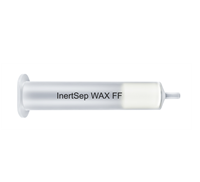
InertSep Series
InertSep Sorbents List
Polymer-based Sorbent Specifications
To conduct solid phase extraction it is necessary to choose a sorbent best suited for the nature of your target compound and sample matrix. The advantages of polymer-based sorbent are the availability in the wide pH range and the absence of secondary interaction which can occur with silica-based sorbents.
Polymer-Based (Reversed Phase)
|
Sorbent
|
Base gel
|
Functional Group | End-Capping |
Average Particle size [µm]
|
Surface Area [m²/g]
|
Pore Size [nm]
|
Pore Volume [mL/g]
|
Carbon Load (%) |
Ion Exchange Capacity [meq/g]
|
pH Range | Remark |
|---|---|---|---|---|---|---|---|---|---|---|---|
|
HLB
|
N-MA-SDB
|
-
|
- |
30
|
720
|
7
|
1.3
|
- |
-
|
1-14
|
|
|
HLB FF
|
-
|
-
|
60 |
720
|
7
|
1.3
|
-
|
- |
1-14
|
|
|
|
PLS-2
|
SDB |
-
|
-
|
70 |
700
|
7
|
1.1
|
-
|
- |
1-14
|
|
|
PLS-3
|
N-MA-SDB |
-
|
-
|
60 |
600
|
7
|
1.1
|
-
|
- |
1-14
|
|
|
EZ Cartridge RP-1
|
MA-DVB
|
-
|
- |
10
|
-
|
-
|
-
|
- |
-
|
1-14
|
|
| Pharma | N-MA-SDB | - | - | 30 | 600 | 7 | 1.1 | - | - | 1-14 | |
| Pharma FF | - | - | 60 | 600 | 7 | 1.1 | - | - | 1-14 |
MA : Methacrylate polymer
SDB : Styrene-Divinylbenzene copolymer
DVB : Divinylbenzene copolymer
Polymer-Based (Ion Exchange)
|
Sorbent
|
Base gel
|
Functional Group | End-Capping |
Average Particle size [µm]
|
Surface Area [m²/g]
|
Pore Size [nm]
|
Pore Volume [mL/g]
|
Carbon Load (%) |
Ion Exchange Capacity [meq/g]
|
pH Range | Remark |
|---|---|---|---|---|---|---|---|---|---|---|---|
|
MA-1
|
MA
|
Quaternary ammonium
|
- |
70
|
250
|
13
|
0.7
|
- |
0.5
|
1-14
|
Cl− ion pair
|
|
MA-2
|
Diethyl amine
|
-
|
70 |
250
|
13
|
0.8
|
-
|
0.5 |
1-14
|
Cl− ion pair
|
|
|
MC-1
|
Sulufonic acid
|
-
|
70 |
80
|
20
|
0.4
|
-
|
0.5 |
1-14
|
Na+ ion pair
|
|
|
MC-2
|
Carboxylic acid
|
-
|
70 |
80
|
18
|
0.4
|
-
|
0.5 |
1-14
|
Na+ ion pair
|
|
|
MAX
|
SDB
|
Quaternary ammonium
|
- |
30
|
520
|
9
|
1.2
|
- |
0.3
|
1-14
|
Cl− ion pair
|
| MAX FF | Quaternary ammonium | - | 70 | 480 | 9 | 1.1 | - | 0.3 | 1-14 | Cl− ion pair | |
| WAX | Diethyl amine | - | 30 | 520 | 9 | 1.2 | - | 0.5 | 1-14 | OH− ion pair | |
| WAX FF | Diethyl amine | - | 70 | 480 | 9 | 1.1 | - | 0.7 | 1-14 | OH− ion pair | |
| MCX | Sulufonic acid | - | 30 | 520 | 9 | 1.2 | - | 1.3 | 1-14 | H+ ion pair | |
| MCX FF | Sulufonic acid | - | 70 | 480 | 9 | 1.1 | - | 1.2 | 1-14 | H+ ion pair | |
| WCX | Carboxylic acid | - | 30 | 520 | 9 | 1.2 | - | 1.5 | 1-14 | H+ ion pair | |
| WCX FF | Carboxylic acid | - | 70 | 480 | 9 | 1.1 | - | 1.2 | 1-14 | H+ ion pair |
MA:Methacrylate polymer
SDB:Styrene-Divinylbenzene copolymer
Polymer-Based (Chelate)
|
Sorbent
|
Base gel
|
Functional Group | End-Capping |
Average Particle size [µm]
|
Surface Area [m²/g]
|
Pore Size [nm]
|
Pore Volume [mL/g]
|
Carbon Load (%) |
Ion Exchange Capacity
|
pH Range | Remark |
|---|---|---|---|---|---|---|---|---|---|---|---|
|
ME-1
|
MA
|
Iminodiacetic acid
|
- |
70
|
80
|
21
|
0.5
|
- |
Cu2+ 0.3 (mmol/g)
|
1-14
|
H+ ion pair
|
|
ME-2
|
Iminodiacetic acid + Tertiary amine
|
-
|
70 |
80
|
21
|
0.5
|
-
|
Cu2+ 0.3 (mmol/g) |
1-14
|
H+ ion pair
|
MA:Methacrylate polymer
Silica-based Sorbent Specifications
Silica-based SPE sorbent materials are cheaper and have higher physical strength compared with polymer-based sorbent materials. Silica offers a wide variety of separation mechanisms using a combination of primary functional group interaction with secondary interactions due to the nature of silica-base.
Silica-Based (Non-Polar)
|
Sorbent
|
Base gel
|
Functional Group
|
End-capping
|
Average Particle Size [µm]
|
Surface Area [m²/g]
|
Pore size [nm]
|
Pore Volume [mL/g]
|
Carbon Load [%]
|
Ion Exchange Capacity [meq/g]
|
pH Range
|
Remark
|
|---|---|---|---|---|---|---|---|---|---|---|---|
|
C18
|
SiO2
|
Octadecyl (trifunctional)
|
High
|
60
|
450
|
6
|
0.7
|
19
|
-
|
2-8
|
High Inertness
|
|
C18 FF
|
Octadecyl (trifunctional)
|
High
|
120
|
450
|
6
|
0.7
|
19
|
-
|
2-8
|
High Inertness
|
|
|
C18-B
|
Octadecyl (monofunctional)
|
Middle
|
45
|
450
|
6
|
0.7
|
14 |
-
|
2-8
|
Normal Inertness
|
|
|
C18-C
|
Octadecyl (trifunctional)
|
Low
|
60
|
450
|
6
|
0.7
|
16
|
-
|
2-8
|
Poor Inertness
|
|
|
C18-C FF
|
Octadecyl (trifunctional)
|
Low
|
120
|
450
|
6
|
0.7
|
16
|
-
|
2-8
|
Poor Inertness
|
|
|
C18-ENV
|
Octadecyl (trifunctional)
|
Low
|
60
|
450
|
6
|
0.7
|
16
|
-
|
2-8
|
|
|
|
C8
|
Octyl
|
Middle
|
60
|
450
|
6
|
0.7
|
12
|
-
|
2-8
|
|
|
|
C2
|
Ethyl
|
Middle
|
60
|
450
|
6
|
0.7
|
5.5
|
-
|
2-8
|
|
|
|
CH
|
Cyclohexyl
|
Middle
|
60
|
450
|
6
|
0.7
|
7.5
|
-
|
2-8
|
|
|
|
PH
|
Phenyl
|
Middle
|
60
|
450
|
6
|
0.7
|
10
|
-
|
2-8
|
|
Silica-Based (Polar)
|
Sorbent
|
Base gel
|
Functional Group
|
End-capping
|
Average particle Size [µm]
|
Surface Area [m²/g]
|
Pore size [nm]
|
Pore Volume [mL/g]
|
Carbon Load [%]
|
Ion Exchange Capacity [meq/g] |
pH Range
|
Remark |
|---|---|---|---|---|---|---|---|---|---|---|---|
|
CN
|
SiO2
|
Cyanopropyl
|
-
|
45
|
450
|
6
|
0.7
|
7.5
|
2-8
|
||
|
2OH
|
Diol
|
-
|
60
|
450
|
6
|
0.7
|
10
|
-
|
2-8 |
|
|
|
SI
|
-
|
-
|
60
|
450
|
6
|
0.7
|
-
|
-
|
2-8 |
|
|
|
SI FF
|
-
|
-
|
120
|
450
|
6
|
0.7
|
-
|
-
|
2-8 |
|
Silica-Based (Ion Exchange)
|
Sorbent
|
Base gel
|
Functional Group
|
End-capping
|
Average particle Size [µm]
|
Surface Area [m²/g]
|
Pore size [nm]
|
Pore Volume [mL/g]
|
Carbon Load [%]
|
Ion Exchange capacity [meq/g]
|
pH Range
|
Remark
|
|---|---|---|---|---|---|---|---|---|---|---|---|
|
CBA
|
SiO2
|
Propylcarboxylic acid
|
-
|
45
|
450
|
6
|
0.7
|
8.5
|
1.2
|
2-8
|
H+ ion pair
|
|
PRS
|
Propylsulfonic acid
|
-
|
45
|
450
|
6
|
0.7
|
8.5
|
1.2
|
2-8
|
H+ ion pair
|
|
|
SCX
|
Benzenesulfonic acid
|
-
|
45
|
450
|
6
|
0.7
|
8.5
|
0.6
|
2-8
|
H+ ion pair
|
|
|
SCX-2
|
Benzenesulfonic acid
|
-
|
60
|
450
|
6
|
0.7
|
17
|
1.2
|
2-8
|
Na+ ion pair
|
|
|
NH2
|
AminoPropyl
|
-
|
60
|
450
|
6
|
0.7
|
10
|
0.9
|
2-8
|
|
|
|
NH2 FF
|
AminoPropyl
|
-
|
120
|
450
|
6
|
0.7
|
10
|
0.9
|
2-8
|
|
|
|
PSA
|
Ethylenediamine-N-propyl
|
-
|
60
|
450
|
6
|
0.7
|
11.5
|
1.5
|
2-8
|
|
|
|
SAX
|
Quaternary ammonium
|
-
|
45
|
450
|
6
|
0.7
|
7
|
0.7
|
2-8
|
OH− ion pair
|
|
|
SAX-2
|
Quaternary ammonium
|
-
|
60
|
450
|
6
|
0.7
|
11.5
|
0.45
|
2-8
|
Cl− ion pair
|
Alumina / Florisil
|
Sorbent
|
Base gel
|
Functional Group
|
End-capping
|
Average particle Size [µm]
|
Surface Area [m²/g]
|
Pore size [nm]
|
Pore Volume [mL/g]
|
Carbon Loading [%]
|
Ion Exchange capacity [meq/g]
|
pH Range
|
Remark
|
|---|---|---|---|---|---|---|---|---|---|---|---|
|
AL-A
|
Aluminium oxide
|
-
|
-
|
100
|
130
|
8
|
0.3
|
-
|
-
|
-
|
acid (pH 3.5-5.0)
|
|
AL-N
|
-
|
-
|
100
|
130
|
8 |
0.3
|
-
|
-
|
-
|
neutral (pH 6.0-7.5)
|
|
|
AL-B
|
-
|
-
|
100
|
130
|
8
|
0.3
|
-
|
-
|
-
|
basic (pH 9.0-10.5)
|
|
|
FL
|
Magnesium silicate (Florisil)
|
-
|
-
|
50-200
|
230
|
9
|
0.5
|
-
|
-
|
-
|
|
|
FL-PR
|
Magnesium silicate (Florisil PR)
|
-
|
-
|
100-300
|
230
|
9
|
0.5
|
-
|
-
|
-
|
|
Specialty Phases SPE
|
Sorbent
|
Base gel
|
Functional Group
|
End-capping
|
Average particle Size [µm]
|
Surface Area [m²/g]
|
Pore size [nm]
|
Pore Volume [mL/g]
|
Carbon Loading [%]
|
Ion Exchange capacity [meq/g]
|
pH Range
|
Remark
|
|---|---|---|---|---|---|---|---|---|---|---|---|
|
AC
|
Activated Carbon
|
-
|
-
|
60/150 (mesh)
|
800-1200
|
-
|
-
|
-
|
-
|
-
|
-
|
|
GC
|
Graphite Carbon
|
-
|
-
|
120/400 (mesh)
|
85
|
45
|
1
|
-
|
-
|
-
|
-
|
|
DRY
|
Sodium sulfate, anhydrous(Na2SO4)
|
-
|
-
|
-
|
-
|
-
|
-
|
-
|
-
|
-
|
-
|
|
K-solute
|
Diatomaceous earth
|
-
|
-
|
10/42mesh >90 %
|
-
|
-
|
-
|
-
|
-
|
-
|
-
|
|
Phospholipid Remover
|
-
|
-
|
-
|
-
|
-
|
-
|
-
|
-
|
-
|
-
|
Phospholipid removal ratio > 90 % |